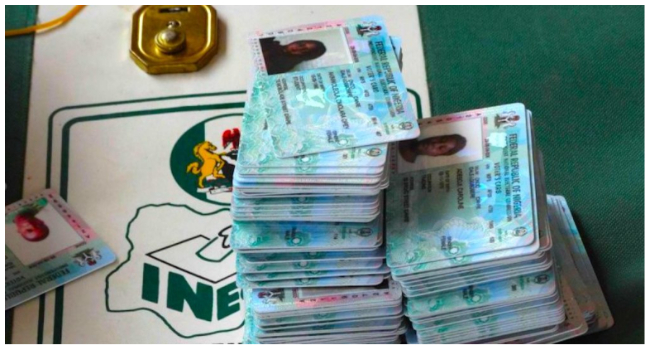
A controversy surrounding the alleged demand for Permanent Voter Cards (PVCs) from workers in Taraba State has ignited widespread public debate, with legal and political observers warning against any attempt to tie public servants’ salaries to electoral participation.
The issue arose following allegations that teachers and other government workers in the state were directed to submit photocopies of their Permanent Voter Cards before their salaries could be processed.
The claims were strongly denied by the Taraba State Universal Basic Education Board (TSUBEB), which maintained that there was no directive making salary payments conditional on the submission of PVCs.
According to the board, its Chairperson, Christiana Binga, merely encouraged teachers and education workers to register as voters and obtain their Permanent Voter Cards as part of their civic responsibilities, insisting that salary payments were never linked to the exercise.
The allegation was initially raised by opposition figures led by Emmanuel Bwacha of the Peoples Democratic Party (PDP), who claimed that workers were instructed to provide photocopies of their voter cards before their salaries would be processed.
The allegation has generated concern across the country, with many Nigerians expressing fears that such a directive, if true, could undermine constitutional rights and democratic principles.
Analysts argue that while governments have a responsibility to encourage voter registration and civic participation, compelling workers to present PVCs as a condition for receiving earned salaries would amount to political coercion.
Legal experts note that Nigeria’s Constitution guarantees citizens the right to freedom of expression, freedom of association, and protection against discrimination. They emphasize that participation in elections, including voter registration and voting, remains a personal constitutional right that should not be enforced through administrative or employment-related measures.
Observers also stress that salaries are earned through services rendered and should never become instruments for advancing political objectives. They warn that making wage payments dependent on electoral compliance could create a dangerous precedent capable of eroding public confidence in democratic institutions.
Political commentators further caution that any attempt to connect workers’ livelihoods to political activities could expose public servants to undue pressure during election periods, particularly as campaigns for the 2027 general elections begin to gather momentum.
The controversy has also renewed calls for governments at all levels to clearly separate public administration from partisan politics and ensure that civil servants perform their duties without fear of political intimidation or discrimination.
Although TSUBEB has denied issuing any directive linking salaries to PVC submission, many stakeholders believe the Taraba State Government should provide further clarification to eliminate any lingering doubts and reassure workers that their constitutional rights and welfare remain fully protected.
The incident has become part of a broader national conversation on protecting democratic values, with civic groups urging public officials to promote voter participation through education and persuasion rather than measures that could be interpreted as coercive.
As preparations for the 2027 general elections continue across Nigeria, political analysts say safeguarding citizens’ political freedom and protecting workers from undue influence will remain essential to maintaining public trust in the country’s democratic process.
Keywords: Taraba State, PVC, Permanent Voter Card, TSUBEB, Christiana Binga, Emmanuel Bwacha, PDP, Governor Agbu Kefas, 2027 elections, workers’ salaries, democracy, constitutional rights
Tags: Taraba State, PVC, TSUBEB, Christiana Binga, Emmanuel Bwacha, Governor Agbu Kefas, PDP, 2027 Election, Workers Rights, Nigerian Politics, Democracy, Constitution